
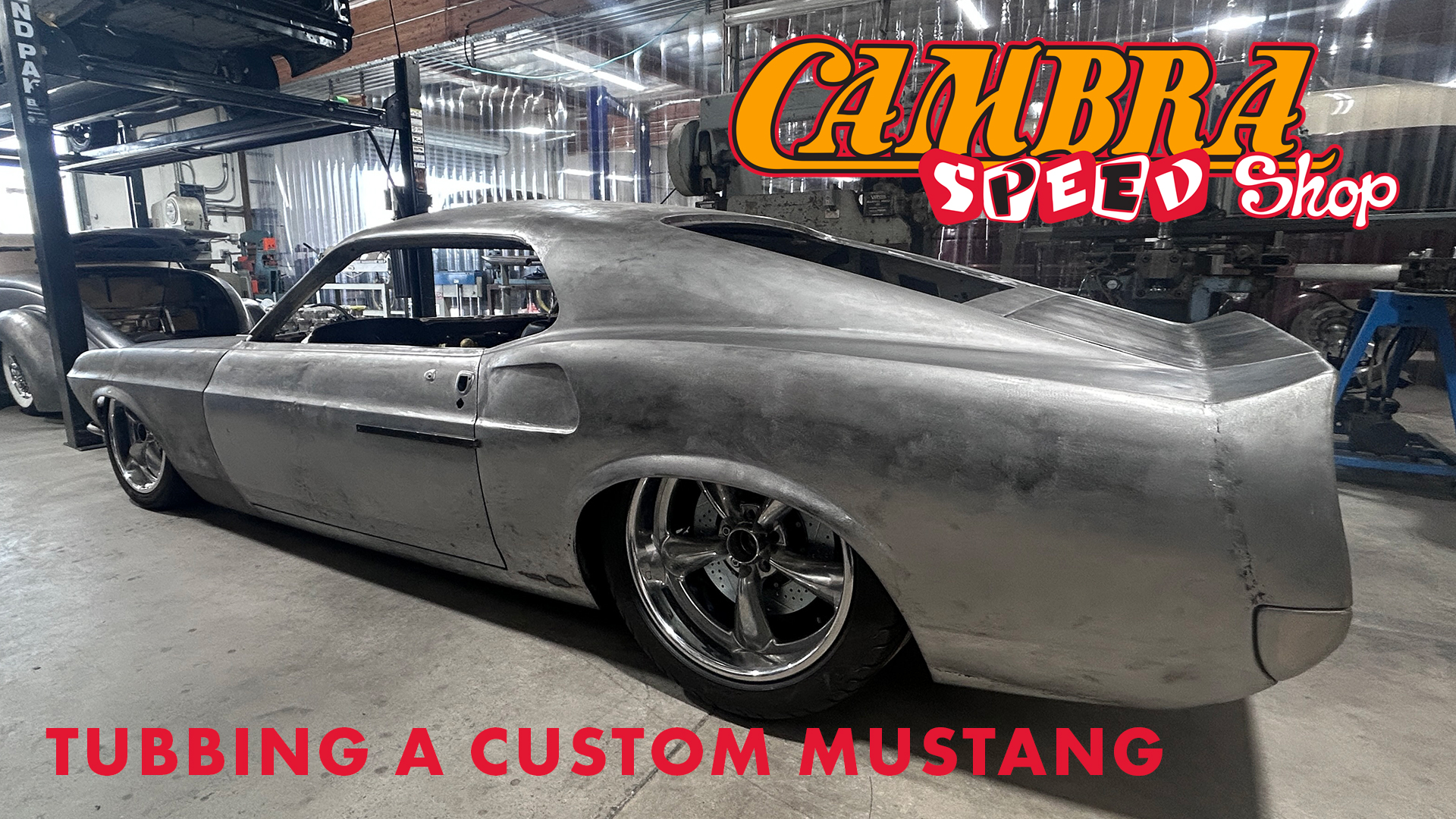

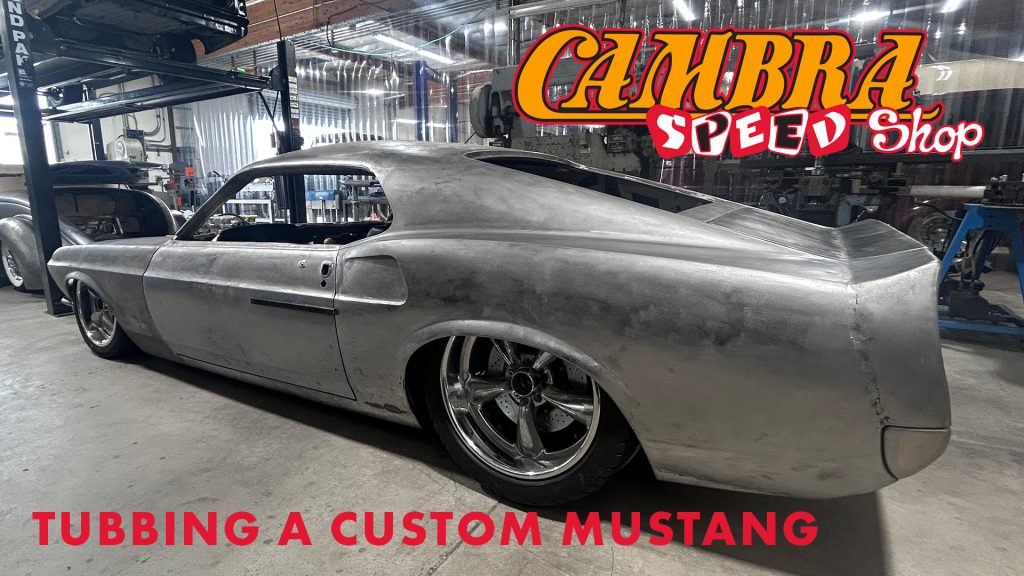
Tubbing a Custom Mustang
There comes a point in a serious custom build when the factory sheetmetal simply has to get out of the way.
That point came early on a fully custom Mustang currently taking shape in the shop.
Fabricator Rick Kersh was tasked with making room for some massive rear rubber, but this wasn’t going to be a simple mini-tub job. The Mustang started life as a unibody car, and years of use had already taken their toll on the original floor. So rather than trying to save what was left, the tired and rusted sheetmetal was cut away and tossed aside.
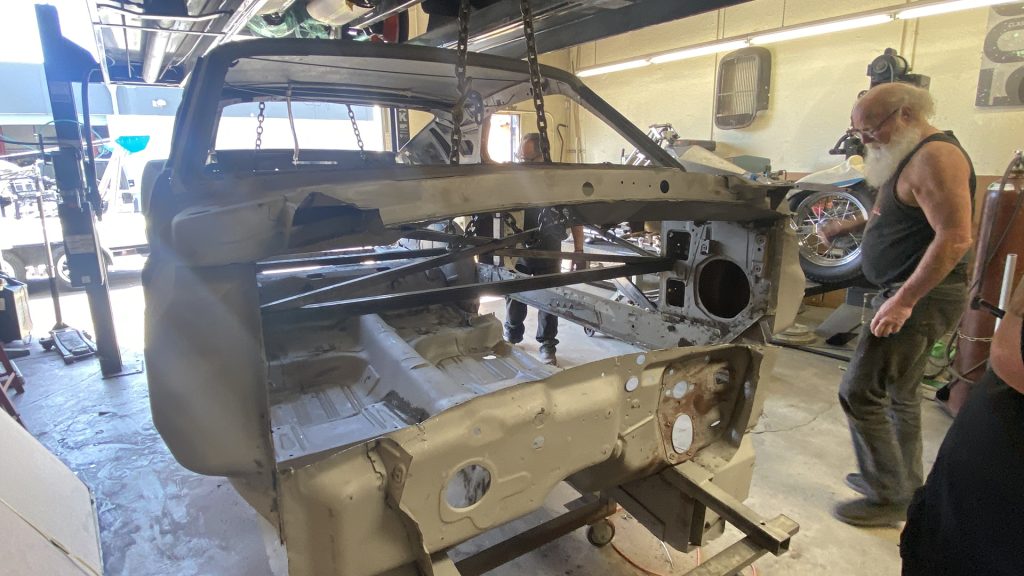
The body was then positioned over a custom narrowed chassis, and Rick reached for one of the oldest fabrication tools in the shop:
A tall stack of cardboard.
Before You Cut Metal, You Better Have a Plan
Building wheel tubs starts long before the first piece of sheetmetal gets shaped.
First, you need to know exactly what wheel and tire combination the car will run. Then you have to allow enough room for the tire to move vertically through suspension travel and laterally as the chassis loads and unloads.
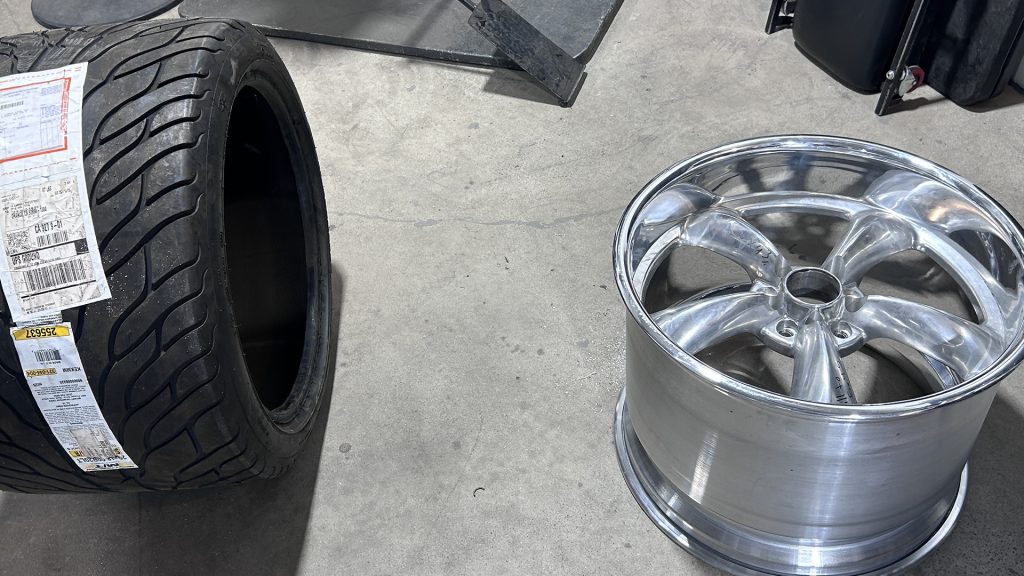
On this Mustang, that was only the beginning.
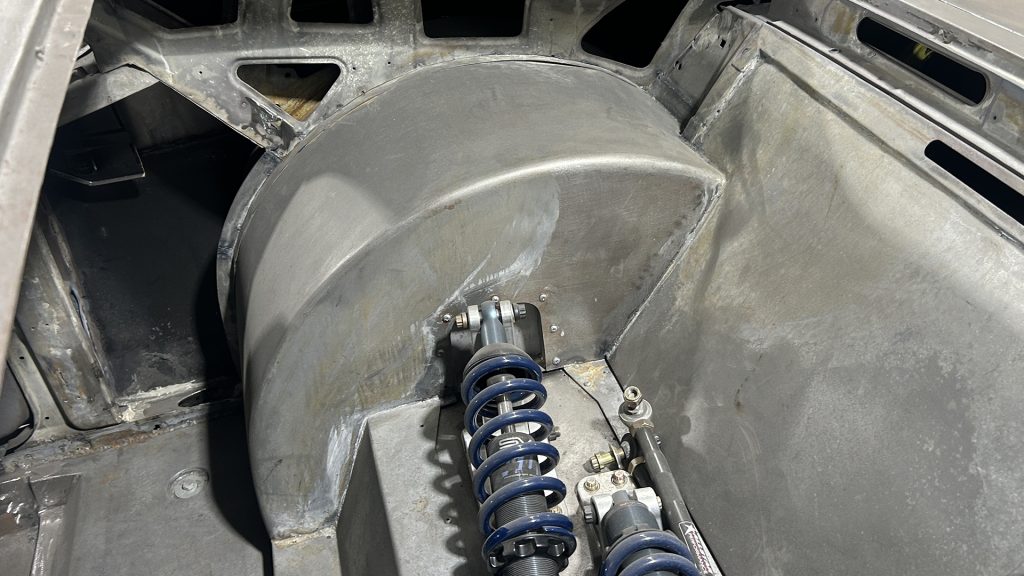
The car uses an inboard cantilevered rear suspension, which introduced another challenge. Part of the suspension assembly needs room to travel upward into the cabin area, meaning the tubs couldn’t simply follow the tire. They also had to work around the suspension geometry while still allowing future access for service and adjustment.
That is where the cardboard starts earning its keep.
Cardboard Engineering
Rick began laying out the tub structure one piece at a time, working around the inner body structure, suspension components and quarter panels.
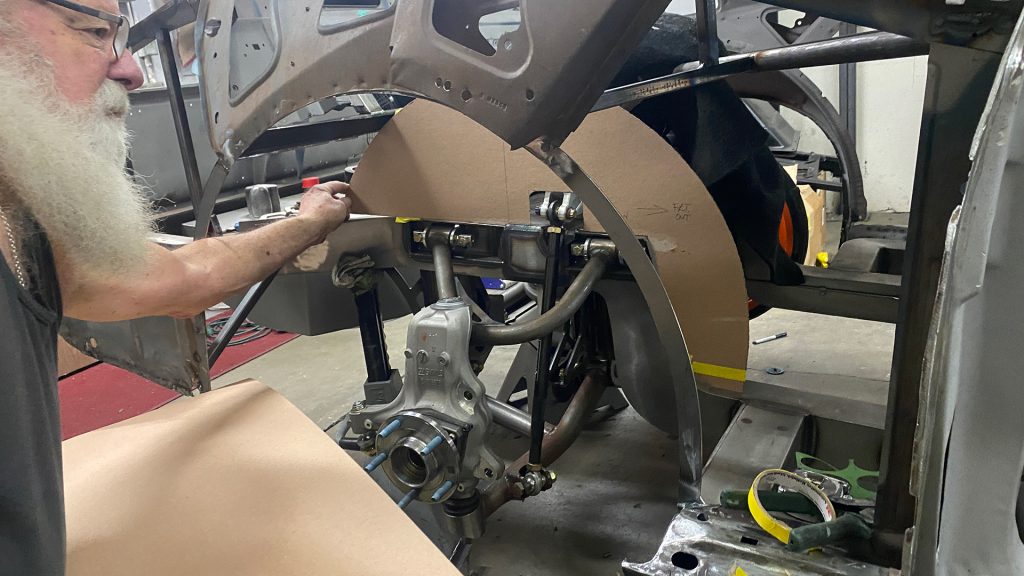
Cardboard templates let a fabricator establish curves, clearances and mounting points before committing expensive sheetmetal to the shear and brake. Trim a little here. Add a little there. Check the suspension. Check the tire clearance. Check it again.
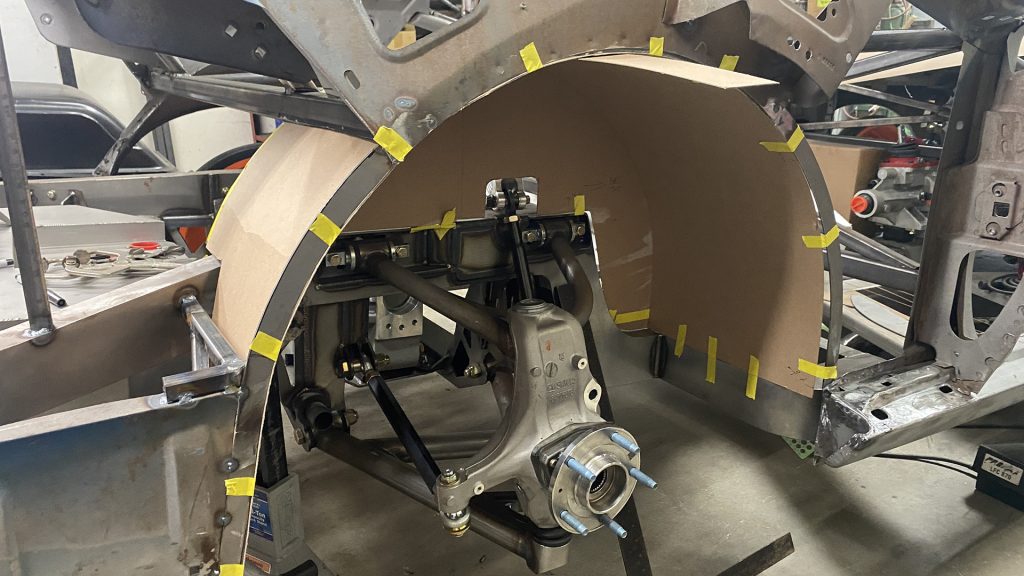
When the pattern is right, the metal follows.
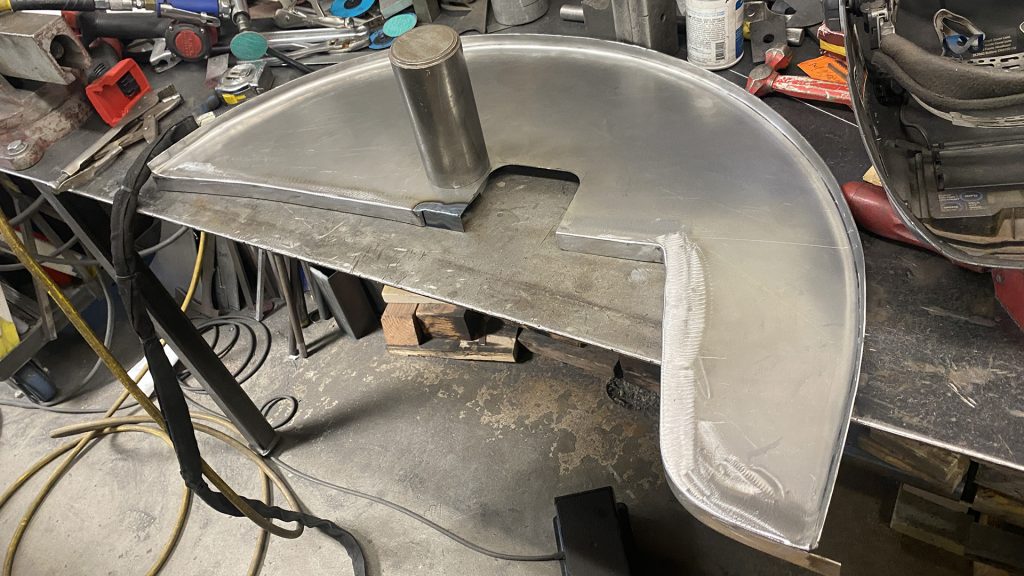
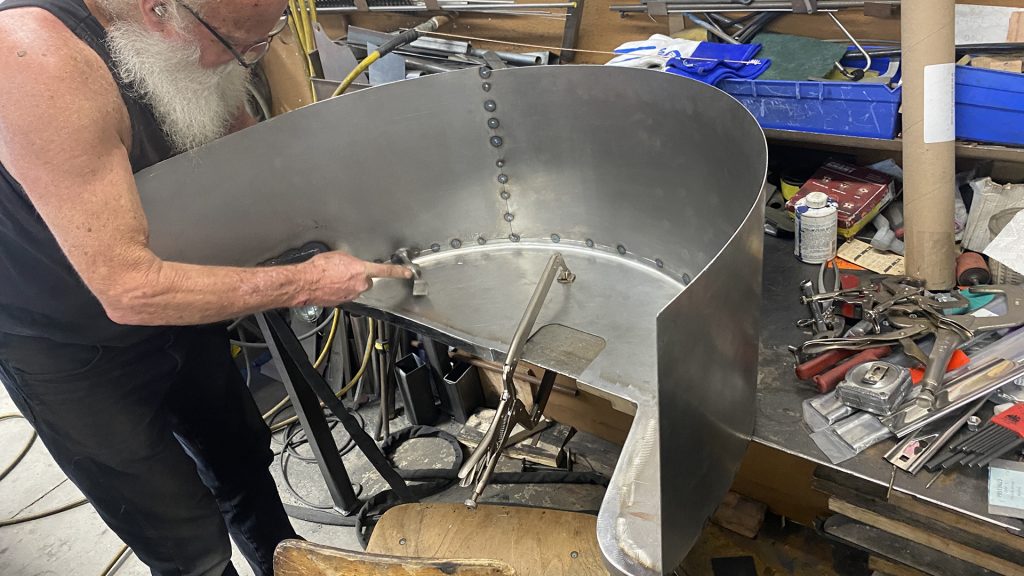
Rick first fabricated the inner wall of the tub, including a removable access panel so the cantilever suspension can be reached later without tearing the car apart.
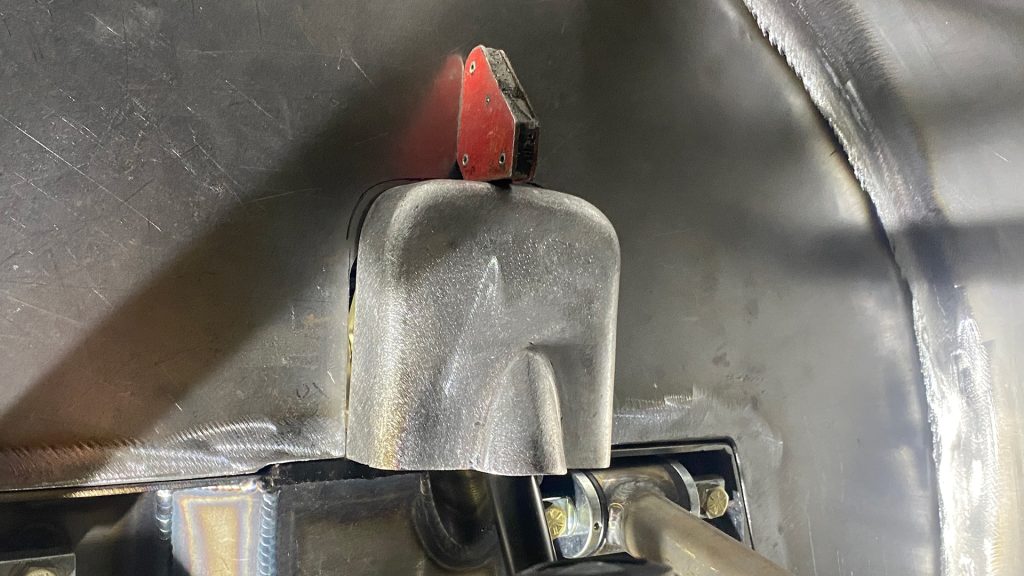
Once the basic tub shape was established, the outer edge was rolled and fitted for a clean butt-welded connection.
That’s when another problem appeared.
These tubs were so large that the Mustang’s original inner body structure was no longer going to work.
So Rick rebuilt it.
Not Just a Bigger Wheel Tub
For plenty of custom builds, a fabricated inner tub would be the end of the story.
Not here.
This Mustang is getting the full Cambra Speed Shop body treatment, and that means thinking about what happens after the paint is polished and the car actually hits the road.
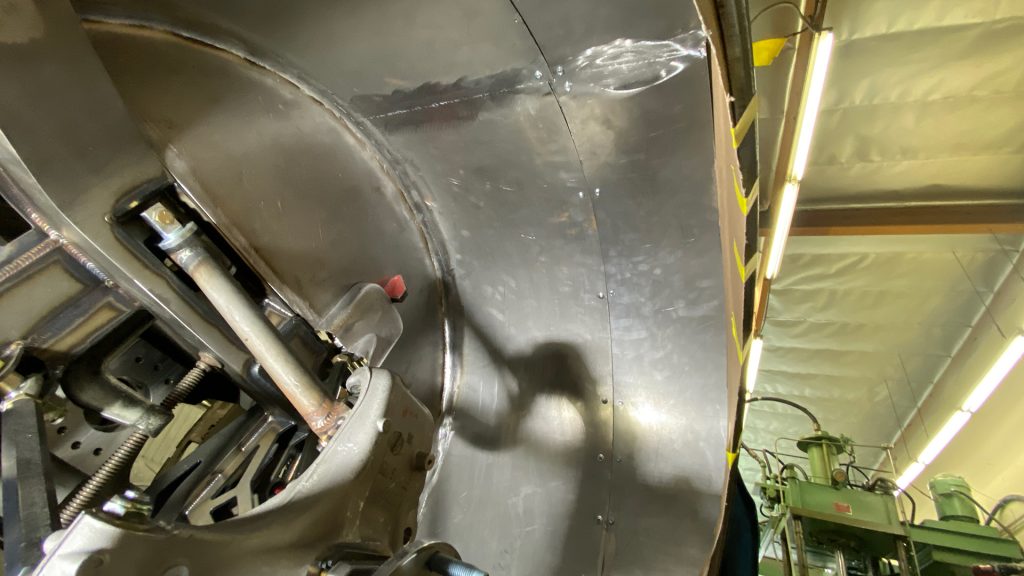
A wide tire can throw an amazing amount of debris.
One small rock launched from a sticky rear tire can hammer the backside of a beautifully finished quarter panel hard enough to leave a dent showing on the outside.
After spending countless hours getting a custom body straight, that’s not something we’re willing to gamble on.
The answer is an additional outer-tub structure that acts as a separate inner fender. It creates another layer of protection between the spinning tire and the finished quarter panel.
Because burning rubber is fun.
Explaining why your freshly painted quarter panel has a reverse dent in it isn’t.
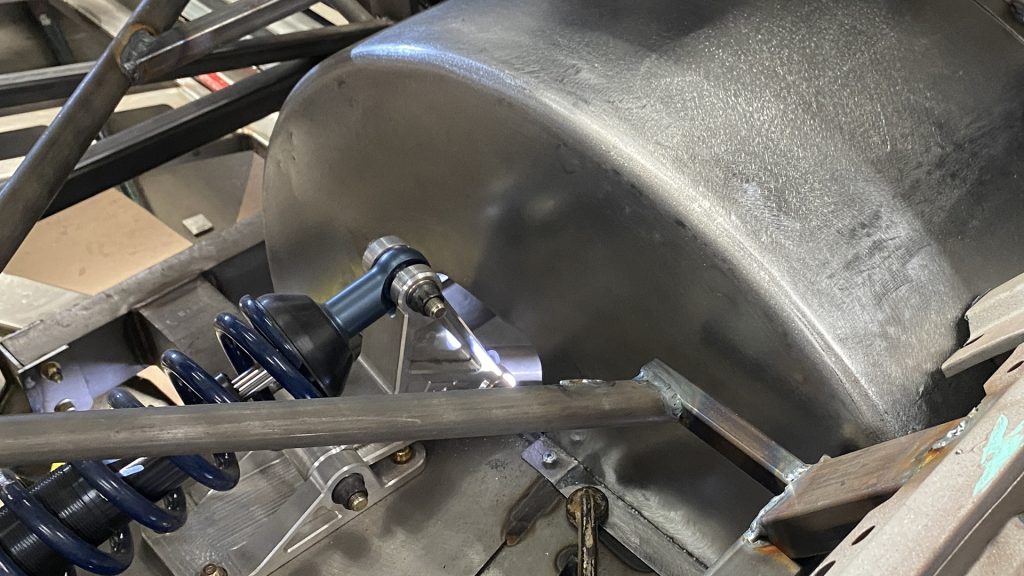
Sometimes the Quarter Panels Have to Come Off
To properly fabricate and weld everything, Rick carefully removed the Mustang’s quarter panels, opening up the entire rear section of the car.
With the quarters out of the way, he could reshape the inner structure, build the tubs and establish the clearances needed around the chassis and suspension.
Then the quarter panels went back on.
Why?
Because close isn’t good enough.
With the exterior sheetmetal temporarily refitted, Rick could verify the tub’s relationship to the actual body and make sure everything fit tight before permanently welding the structure into place.
Once everything lined up, the tubs were tacked into position and tied into the new custom floor.
The Stuff You Won’t See Matters
When this Mustang is finished, most people will notice the stance, the bodywork, the wheels and whatever is hiding under the hood.
Very few will crawl underneath it and study the wheel tubs.
That’s okay.
Because some of the most important fabrication on a custom car is the work you’re never supposed to notice.
The tubs have to clear the tires. They have to accommodate suspension travel. They have to provide access for maintenance. They have to integrate into the chassis and body structure. And in this case, they also have to protect the quarter panels when this thing finally lights up those massive rear tires.
It starts with a pile of cardboard.
It ends with a Mustang that could never have been built around the factory floorpan.
That’s custom fabrication.